Safety Stock Won't Save You: Why Static Inventory Thresholds Set You Up to Fail

Safety Stock Won't Save You: Why Static Inventory Thresholds Set You Up to Fail
Safety stock feels like a safety net. You set a minimum threshold, and when inventory dips below it, you reorder. Simple.

But here's the problem: your business isn't simple. Demand shifts. Lead times stretch. Seasons change. And that static number you set three months ago? It has no idea any of that happened.

Relying on safety stock alone is like driving with your eyes on the rearview mirror. You're reacting to what already happened instead of preparing for what's coming.

The Formula That Can't Keep Up

Most safety stock calculations look something like this: take your average daily sales, multiply by average lead time, add a buffer. Done.

That formula assumes two things that are almost never true:

  1. Demand stays consistent. It doesn't. A single viral TikTok can 10x your orders overnight. A competitor's promotion can cut them in half.
  2. Lead times are predictable. They aren't. As of late 2024, average raw material delivery times sat at 81 days—up roughly 25% from pre-pandemic levels. And that's the average. Individual shipments swing wildly.

When both inputs to your safety stock formula are moving targets, the output is a guess. Sometimes you guess right. Often you don't.

What Happens When You Guess Wrong

The cost of getting it wrong shows up in two ways, and both hurt.

Too much stock. Your cash is sitting on warehouse shelves instead of funding growth. Holding costs climb. Products expire, go out of season, or need heavy discounts to move. Overstocks alone cost the average retailer 3.2% in lost revenue.

Too little stock. Customers hit your site, see "out of stock," and leave. Most don't come back. Stockouts account for 4.1% in lost revenue and cause 40% of potential sales losses across the industry.

Combined, inventory distortion—the gap between what you have and what you need—cost retailers $1.77 trillion globally in 2023. That's 7.2% of all retail sales, gone.

A static safety stock number doesn't protect you from this. It contributes to it.
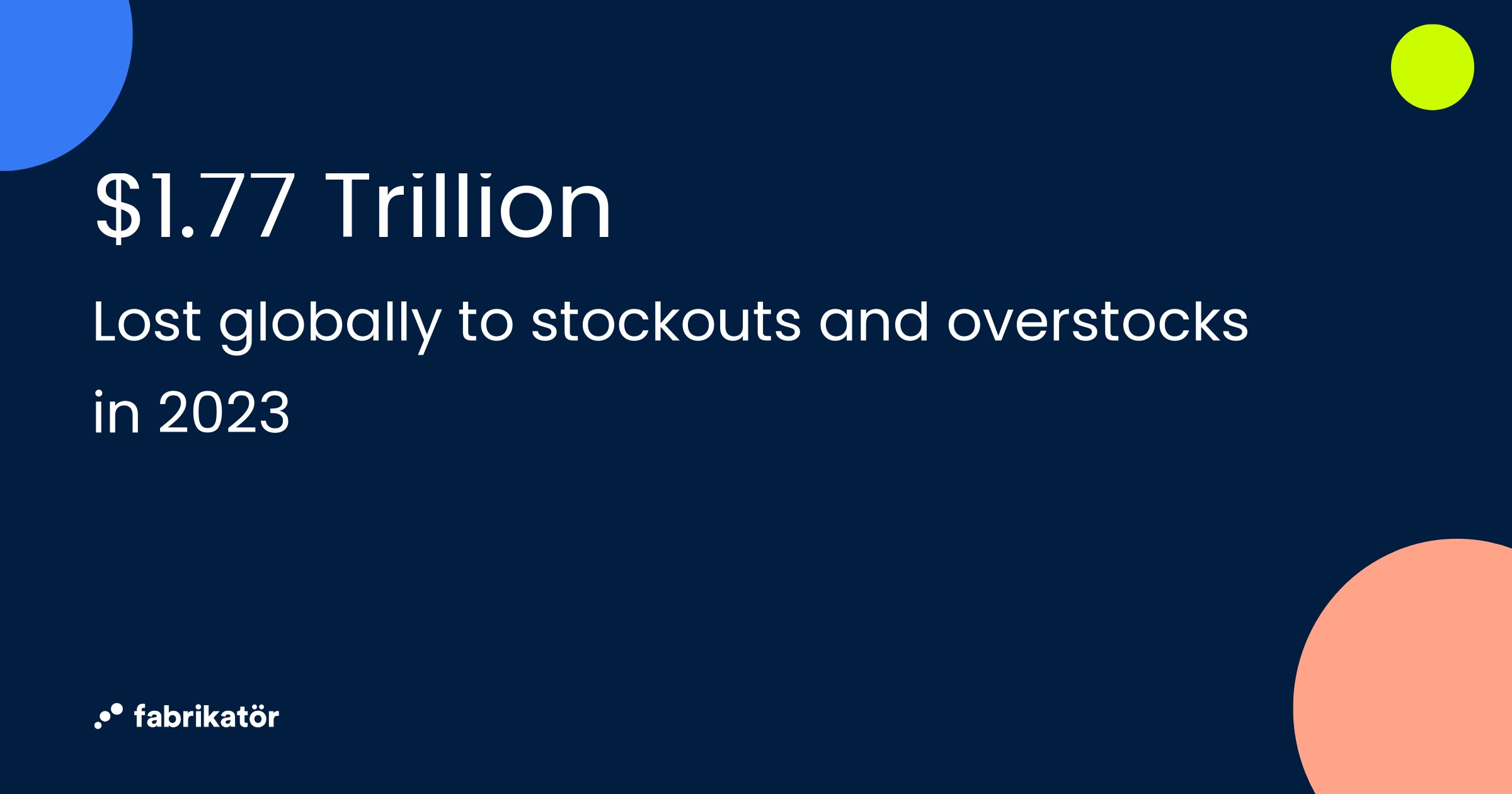
$1.77 trillion lost globally to stockouts and overstocks in 2023

The Real Problem: You're Always Looking Backward

Safety stock is a rear-facing metric. It tells you what you needed last time. It says nothing about what's coming next month.

Think about what a typical safety stock threshold misses:

  • Seasonality. Your December demand looks nothing like your February demand. But your safety stock number treats them the same.
  • Promotions. You're planning a 30% off sale next week. Your safety stock doesn't know that.
  • Market shifts. A competitor just went out of business. Demand is about to spike. Your reorder point hasn't moved.
  • Supplier disruptions. In 2024, global supply chains saw a 38% rise in disruptions. Your static threshold can't account for a shipment that's three weeks late.

The result is a constant cycle of firefighting. You're always behind—scrambling to place emergency orders or figuring out what to do with excess inventory that shouldn't have been ordered in the first place.

81 days average delivery time, up 25% from pre-pandemic

Forward-Looking Beats Backward-Looking

The alternative isn't complicated in concept: stop reacting and start anticipating.

Demand forecasting models look at historical sales data, but they don't stop there. They factor in trends, seasonality, planned promotions, lead time variability, and external signals. Instead of a fixed number that never changes, you get a dynamic projection that updates as conditions change.

Here's what that shift looks like in practice:

With safety stock only: You set a reorder point of 500 units based on last quarter's averages. Demand doubles because of a seasonal surge. You stock out for two weeks. Then you panic-order 2,000 units. The surge ends. Now you're sitting on 1,200 units you can't move.

With demand forecasting: Your system sees the seasonal pattern from prior years, factors in your upcoming promotion calendar, adjusts for current lead times, and recommends ordering 900 units three weeks before the surge hits. You meet demand without overcommitting.

One approach is reactive. The other is proactive. The financial difference compounds every single reorder cycle.
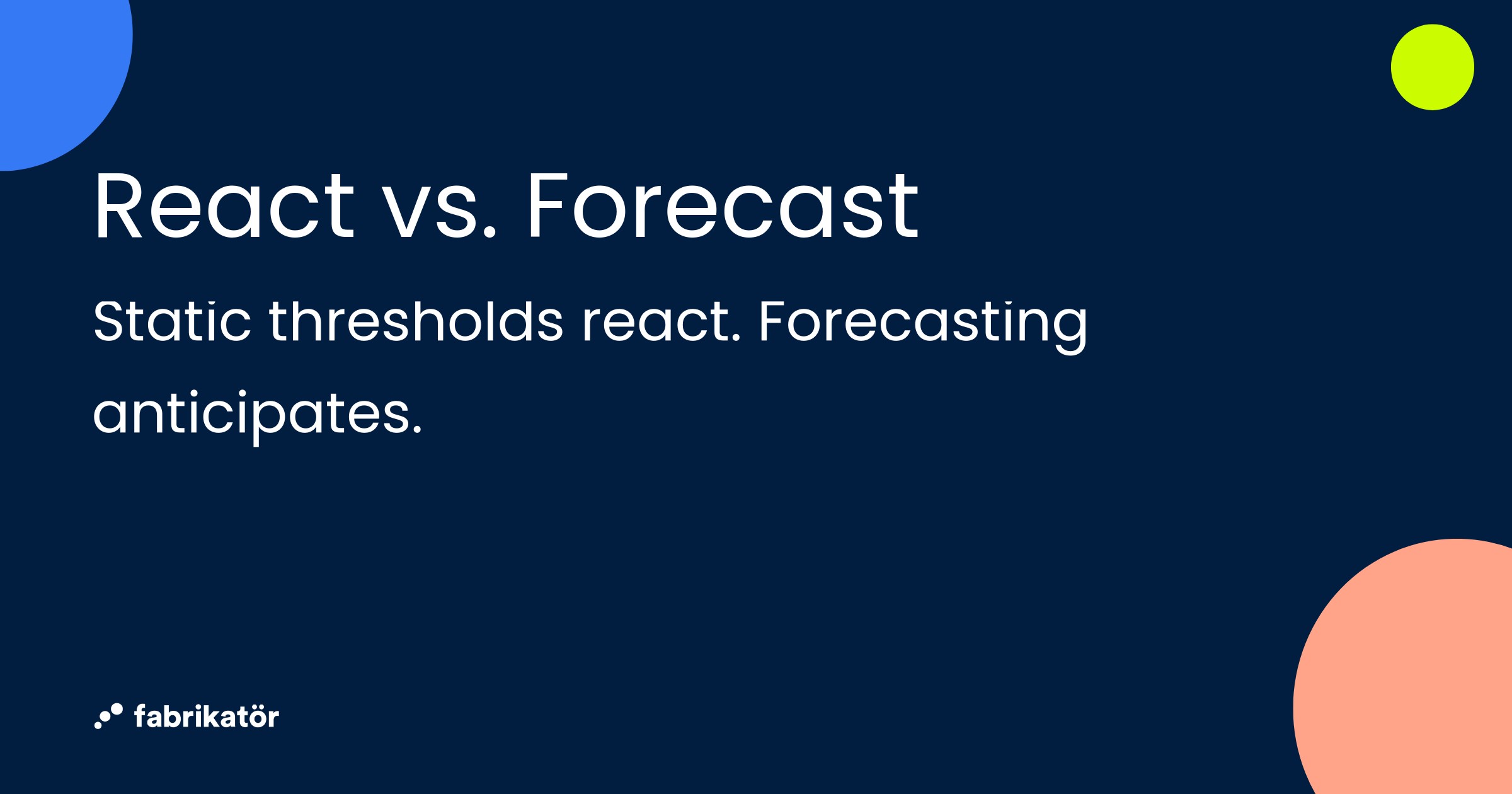
React vs. Forecast — static thresholds react, forecasting anticipates

What a Forecasting-First Approach Actually Changes

Moving from static thresholds to dynamic forecasting doesn't just prevent stockouts. It changes how your entire inventory operation works.

You order the right amount at the right time. Instead of fixed reorder points, your purchasing decisions adjust based on what demand actually looks like in the weeks ahead.

You free up working capital. When you're not hoarding "just in case" inventory, that cash goes back into your business. Improving inventory accuracy from 85% to 95% alone can reduce safety stock requirements by 20-30%.

You plan instead of panic. Supplier lead time just jumped from 30 to 45 days? A forecasting system adjusts your reorder timing automatically. A static safety stock level just lets you run out sooner.

You handle disruption without disaster. When 68% of businesses cite lead time variability as their top supplier challenge, you need a system that recalculates in real time—not one that waits for a stockout to tell you something went wrong.

Safety Stock Isn't the Enemy—Complacency Is

To be clear: safety stock isn't inherently bad. It has a role. The problem is when it's the only tool you're using.

If your entire restocking strategy is "reorder when we hit the threshold," you've built a system that can only react. And in a market where supply chains saw a 38% increase in disruptions in a single year and poor inventory management costs businesses up to 11% of annual revenue, reacting isn't enough.

The brands that maintain healthy margins and consistent availability aren't the ones with the highest safety stock. They're the ones that see what's coming before it arrives.

Forecasting doesn't eliminate uncertainty. But it turns inventory planning from a guessing game into an informed decision. And that's the difference between a business that's always catching up and one that's already ahead.


Bahadır Efeoglu
Want to see Fabrikatör in action?
Get a 30-minute free demo and see how Fabrikatör can improve your inventory operations.
Get a Demo

free newsletter

Newsletter Signup

Get the best in inventory management & Shopify in your inbox
Thank you!
Your submission has been received!
Oops! Something went wrong while submitting the form.

Safety Stock Won't Save You: Why Static Inventory Thresholds Set You Up to Fail

Safety Stock Won't Save You: Why Static Inventory Thresholds Set You Up to Fail

Safety stock feels like a safety net. You set a minimum threshold, and when inventory dips below it, you reorder. Simple.

But here's the problem: your business isn't simple. Demand shifts. Lead times stretch. Seasons change. And that static number you set three months ago? It has no idea any of that happened.

Relying on safety stock alone is like driving with your eyes on the rearview mirror. You're reacting to what already happened instead of preparing for what's coming.

The Formula That Can't Keep Up

Most safety stock calculations look something like this: take your average daily sales, multiply by average lead time, add a buffer. Done.

That formula assumes two things that are almost never true:

  1. Demand stays consistent. It doesn't. A single viral TikTok can 10x your orders overnight. A competitor's promotion can cut them in half.
  2. Lead times are predictable. They aren't. As of late 2024, average raw material delivery times sat at 81 days—up roughly 25% from pre-pandemic levels. And that's the average. Individual shipments swing wildly.

When both inputs to your safety stock formula are moving targets, the output is a guess. Sometimes you guess right. Often you don't.

What Happens When You Guess Wrong

The cost of getting it wrong shows up in two ways, and both hurt.

Too much stock. Your cash is sitting on warehouse shelves instead of funding growth. Holding costs climb. Products expire, go out of season, or need heavy discounts to move. Overstocks alone cost the average retailer 3.2% in lost revenue.

Too little stock. Customers hit your site, see "out of stock," and leave. Most don't come back. Stockouts account for 4.1% in lost revenue and cause 40% of potential sales losses across the industry.

Combined, inventory distortion—the gap between what you have and what you need—cost retailers $1.77 trillion globally in 2023. That's 7.2% of all retail sales, gone.

A static safety stock number doesn't protect you from this. It contributes to it.

$1.77 trillion lost globally to stockouts and overstocks in 2023

The Real Problem: You're Always Looking Backward

Safety stock is a rear-facing metric. It tells you what you needed last time. It says nothing about what's coming next month.

Think about what a typical safety stock threshold misses:

  • Seasonality. Your December demand looks nothing like your February demand. But your safety stock number treats them the same.
  • Promotions. You're planning a 30% off sale next week. Your safety stock doesn't know that.
  • Market shifts. A competitor just went out of business. Demand is about to spike. Your reorder point hasn't moved.
  • Supplier disruptions. In 2024, global supply chains saw a 38% rise in disruptions. Your static threshold can't account for a shipment that's three weeks late.

The result is a constant cycle of firefighting. You're always behind—scrambling to place emergency orders or figuring out what to do with excess inventory that shouldn't have been ordered in the first place.

81 days average delivery time, up 25% from pre-pandemic

Forward-Looking Beats Backward-Looking

The alternative isn't complicated in concept: stop reacting and start anticipating.

Demand forecasting models look at historical sales data, but they don't stop there. They factor in trends, seasonality, planned promotions, lead time variability, and external signals. Instead of a fixed number that never changes, you get a dynamic projection that updates as conditions change.

Here's what that shift looks like in practice:

With safety stock only: You set a reorder point of 500 units based on last quarter's averages. Demand doubles because of a seasonal surge. You stock out for two weeks. Then you panic-order 2,000 units. The surge ends. Now you're sitting on 1,200 units you can't move.

With demand forecasting: Your system sees the seasonal pattern from prior years, factors in your upcoming promotion calendar, adjusts for current lead times, and recommends ordering 900 units three weeks before the surge hits. You meet demand without overcommitting.

One approach is reactive. The other is proactive. The financial difference compounds every single reorder cycle.

React vs. Forecast — static thresholds react, forecasting anticipates

What a Forecasting-First Approach Actually Changes

Moving from static thresholds to dynamic forecasting doesn't just prevent stockouts. It changes how your entire inventory operation works.

You order the right amount at the right time. Instead of fixed reorder points, your purchasing decisions adjust based on what demand actually looks like in the weeks ahead.

You free up working capital. When you're not hoarding "just in case" inventory, that cash goes back into your business. Improving inventory accuracy from 85% to 95% alone can reduce safety stock requirements by 20-30%.

You plan instead of panic. Supplier lead time just jumped from 30 to 45 days? A forecasting system adjusts your reorder timing automatically. A static safety stock level just lets you run out sooner.

You handle disruption without disaster. When 68% of businesses cite lead time variability as their top supplier challenge, you need a system that recalculates in real time—not one that waits for a stockout to tell you something went wrong.

Safety Stock Isn't the Enemy—Complacency Is

To be clear: safety stock isn't inherently bad. It has a role. The problem is when it's the only tool you're using.

If your entire restocking strategy is "reorder when we hit the threshold," you've built a system that can only react. And in a market where supply chains saw a 38% increase in disruptions in a single year and poor inventory management costs businesses up to 11% of annual revenue, reacting isn't enough.

The brands that maintain healthy margins and consistent availability aren't the ones with the highest safety stock. They're the ones that see what's coming before it arrives.

Forecasting doesn't eliminate uncertainty. But it turns inventory planning from a guessing game into an informed decision. And that's the difference between a business that's always catching up and one that's already ahead.
Want to see Fabrikatör in action?
Get a 30-minute free demo and see how Fabrikatör can improve your inventory operations.
GET a Demo

free newsletter

Newsletter Signup

Get the best in inventory management & Shopify in your inbox
Thank you!
Your submission has been received!
Oops! Something went wrong while submitting the form.

Inventory Planning

View More Posts

Want to see Fabrikatör in action?

Get a 30-minute free demo and see how Fabrikatör can improve your inventory operations.
GET a Demo
By clicking “Accept”, you agree to the storing of cookies on your device to enhance site navigation, analyze site usage, and assist in our marketing efforts. View our Privacy Policy for more information.